Tower of Gand Dungeon Exploration — 5×5 Panel System & Event Guide
Tower of Gand features a distinctive 5×5 panel exploration system that serves as the backbone of its dungeon-crawling experience. Each floor presents a grid of concealed panels that players must reveal one at a time, uncovering enemies, events, treasures, and hazards in a layout that changes with every run.
How the 5×5 Panel System Works
Every floor of the Tower of Gand is represented as a 5×5 grid of face-down panels, totaling 25 tiles per floor. Players select which panel to reveal next, and each reveal triggers whatever lies beneath — a combat encounter, a random event, a treasure cache, or an empty corridor. Because the contents of each panel are randomized on every run, no two explorations of the same floor play out identically, which is central to the game's roguelike replayability.
Once a panel is revealed, its contents must be resolved before the player can move on. Combat panels lock you into a turn-based battle, while event panels present choices or automatic effects. The order in which you reveal panels matters significantly: uncovering a healing event early is far more valuable than finding one after your party has already been wiped. Understanding this risk-reward dynamic is the first step toward mastering dungeon exploration.
Since death in Tower of Gand means losing everything due to the permadeath system, every panel flip carries genuine weight. There is no safe way to preview what lies beneath a tile, making each decision a calculated gamble between pushing forward for better rewards and retreating to preserve your progress.
Random Event Types
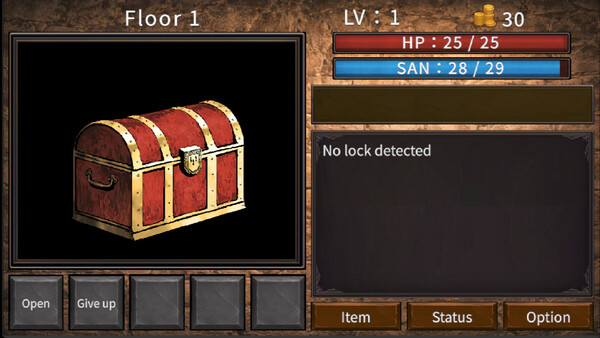
Panels can contain several categories of events beyond standard combat encounters. Treasure panels may reward players with equipment, consumables, or currency that can improve survivability for the current run. Rest panels offer opportunities to recover health or reduce accumulated madness — a critical resource to manage given the game's sanity system. Trap panels impose negative effects such as stat debuffs, health loss, or sudden spikes in madness, punishing careless exploration.
Some panels trigger story-driven events that present the player with branching choices. These narrative encounters can yield powerful rewards if the right option is chosen, but the wrong decision can be devastating. Certain rare events are floor-specific or only appear under particular conditions, encouraging players to experiment with different exploration patterns across multiple runs.
Combat panels make up the majority of the grid and pit players against randomized enemy formations. Since enemies change every run, players cannot rely on memorized strategies for specific floors. Instead, success depends on understanding broader combat principles, class matchups, and the turn-based battle system. Boss panels appear on designated floors and must be cleared to advance deeper into the tower.
Floor Progression and Layout Patterns
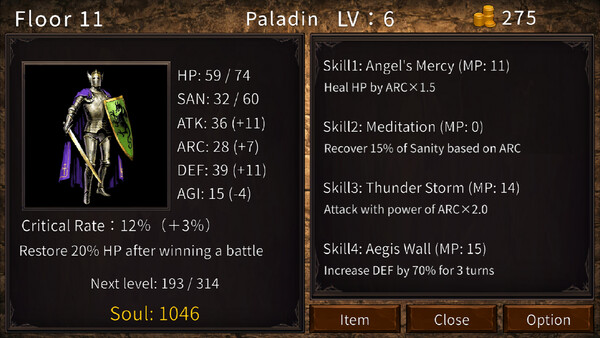
As players ascend the Tower of Gand, the composition of panels on each floor shifts to reflect increasing difficulty. Early floors tend to feature a more generous ratio of beneficial events and weaker enemies, easing players into the run. Higher floors gradually introduce more dangerous combat encounters, nastier traps, and fewer opportunities for recovery, demanding that players arrive well-prepared from the floors below.
While the specific contents of each panel are randomized, the overall distribution of event types follows patterns tied to floor depth. Players who track these tendencies across multiple runs can develop a general sense of what to expect at various stages of the tower, even if they cannot predict individual tiles. This meta-knowledge becomes one of the most valuable tools for experienced players attempting deep runs.
Efficient Dungeon Navigation Strategies
Experienced players recommend a methodical approach to panel reveals rather than random clicking. One common strategy is to start from the edges of the grid and work inward, since this can help establish a buffer of known tiles before committing to the center where higher-value — but also higher-risk — events tend to cluster. Another approach is to reveal only the minimum number of panels needed to reach the floor's exit, minimizing exposure to unnecessary combat and traps.
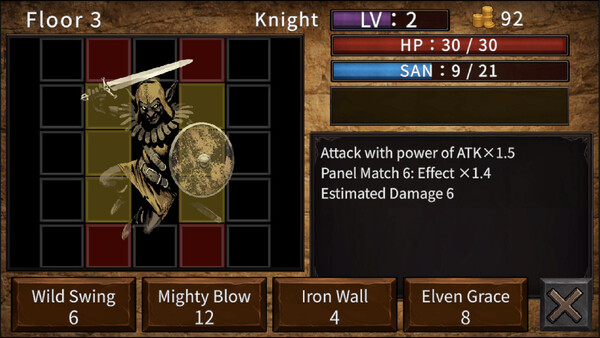
Resource management is inseparable from navigation strategy. Every combat encounter drains health and potentially increases madness, so the optimal path through a floor is not always the one that clears the most panels. Players should weigh whether the potential rewards of additional reveals justify the risk, especially on deeper floors where a single bad encounter can end a run. Saving consumables and class abilities for emergencies rather than spending them freely on early floors is a hallmark of successful deep-tower play.
Class selection also influences exploration strategy. Some of the game's 40-plus classes are better suited to sustained exploration with self-healing or defensive abilities, while others excel at quickly dispatching combat panels but lack the endurance for extended runs. Pairing your class strengths with a complementary exploration style — aggressive revealing for burst-damage classes, cautious pathing for fragile but powerful builds — is key to consistently reaching the tower's upper floors.
Managing Madness During Exploration
The madness system adds a persistent layer of tension to every exploration decision. Certain panel events and combat outcomes increase your character's madness level, and as insanity accumulates, gameplay effects begin to distort the experience — potentially altering what you see on panels, affecting combat performance, or triggering involuntary actions. Keeping madness in check requires actively seeking out rest events and making conservative exploration choices when your sanity is running low.
However, some advanced players deliberately allow madness to rise in pursuit of specific high-risk, high-reward interactions that only become available at elevated insanity levels. This approach is extremely dangerous given the permadeath stakes, but it represents one of the deeper strategic layers available to players who have thoroughly mastered the dungeon's mechanics. Whether you choose to fight the madness or embrace it, understanding how panel reveals interact with the sanity system is essential for any serious tower run.